

Can a Standard Bullet Head Convex Top Paraffin Wax LED Candle Melt in Hot Weather or Sunlight
2026-08-14
As summer temperatures soar and direct sunlight streams through windows, many homeowners and event planners ask a critical question about their flameless decor. The Standard Bullet Head Convex Top Paraffin Wax LED Candle from Guoying offers the visual warmth of a traditional candle without the fire risk, but its wax construction raises valid concerns about heat tolerance. Understanding the thermal limits of this popular lighting solution is essential for protecting your investment and ensuring safe, beautiful displays year-round.
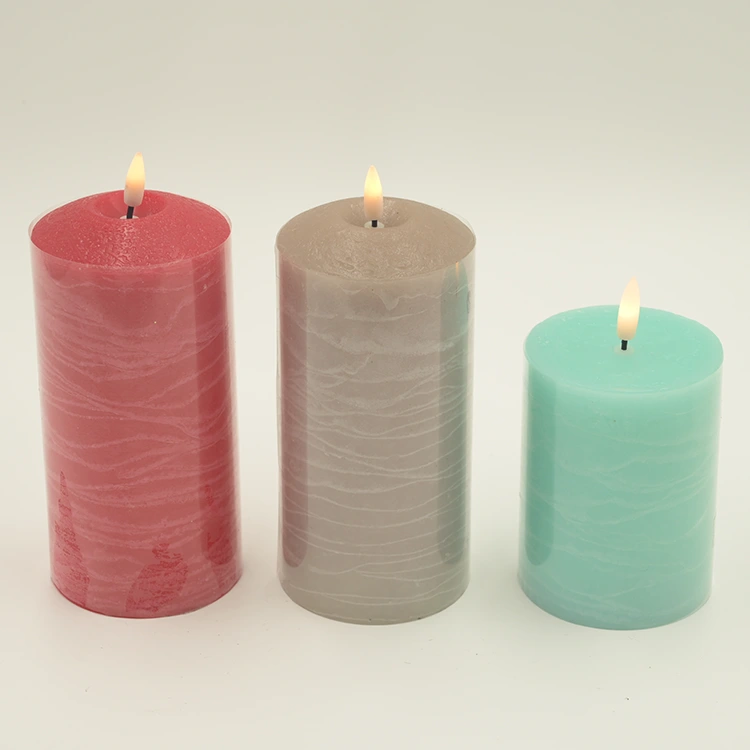
The Science Behind Paraffin Wax and Heat Exposure
Paraffin wax, the primary material in Guoying’s Standard Bullet Head Convex Top Paraffin Wax LED Candle, has a melting point ranging from 120°F to 150°F (49°C to 66°C), depending on the specific blend and additives used. However, the softening point—the temperature at which the wax begins to lose its rigid shape—starts much lower, typically around 100°F (38°C).
To provide clarity, here is a breakdown of temperature thresholds:
| Temperature Range | Physical Effect on the Candle | Risk Level |
|---|---|---|
| Below 75°F (24°C) | No change; maintains structural integrity | Low |
| 75°F – 90°F (24°C – 32°C) | Slight surface softening; may develop a glossy sheen | Moderate |
| 90°F – 105°F (32°C – 41°C) | Visible warping; convex top may flatten; LED housing shifts | High |
| Above 105°F (41°C) | Significant melting; wax pooling; permanent deformation | Critical |
Real-World Scenarios: Sunlight vs. Ambient Heat
Direct sunlight poses a greater threat than ambient air temperature alone. Glass windows amplify solar radiation through the greenhouse effect, raising surface temperatures on a windowsill to as high as 130°F (54°C) even when the outdoor temperature is only 85°F (29°C). In such conditions, a Standard Bullet Head Convex Top Paraffin Wax LED Candle left on a sunny sill for more than 30 minutes can experience:
-
Convex top collapse – the signature rounded dome flattens prematurely.
-
Surface blooming – a white, chalky residue forms as oils rise to the surface.
-
LED module misalignment – the internal light source shifts off-center, ruining the flame effect.
Guoying addresses these vulnerabilities by using a refined paraffin blend with a higher melt point and adding UV-stabilized coatings to reduce solar absorption. However, no wax candle is entirely immune to extreme conditions.
Best Practices for Hot Weather Placement
To maximize the lifespan of your Standard Bullet Head Convex Top Paraffin Wax LED Candle, follow these professional guidelines:
| Placement Location | Recommended? | Precautionary Action |
|---|---|---|
| North-facing windowsill | Yes | Rotate weekly to avoid uneven light exposure |
| South/West-facing windowsill | No | Move at least 3 feet away from direct glass |
| Outdoor covered patio | With caution | Use only if shade is constant and temperature < 85°F |
| Indoor mantel (no direct sun) | Yes | Ideal; ambient heat alone is rarely problematic |
| Near HVAC vents | No | Avoid rapid temperature cycling which causes micro-cracks |
Frequently Asked Questions (FAQ)
Q1: At what exact temperature will my Standard Bullet Head Convex Top Paraffin Wax LED Candle begin to deform?
A: Deformation typically starts at 95°F (35°C) for the convex top area because the dome has a thinner wax cross-section than the base. While the body remains firm until 105°F, the top is the weakest structural point. Guoying recommends keeping the candle below 90°F at all times. If you live in a hot climate, consider placing the candle in an air-conditioned room or using a thermal barrier (like a ceramic plate) beneath it to dissipate ground heat.
Q2: Can I leave my Standard Bullet Head Convex Top Paraffin Wax LED Candle in a car during summer?
A: Absolutely not. Interior car temperatures can exceed 140°F (60°C) within 15 minutes of parking under sunlight. At this level, the paraffin wax completely liquefies, the LED compartment fills with molten wax, and the electronic components short-circuit. Even the high-grade wax used by Guoying cannot withstand these extremes. If you must transport candles in hot weather, keep them in a cooler with ice packs, separated by a cloth to avoid moisture damage.
Q3: Will a melted Standard Bullet Head Convex Top Paraffin Wax LED Candle recover its shape if cooled down?
A: No. Paraffin wax undergoes a permanent structural change once it melts and re-solidifies. The convex top will not reform; instead, it will settle into a concave or uneven surface. Moreover, the LED wick and battery casing may have shifted during melting, causing flickering issues or complete failure. Guoying advises replacing any deformed candle rather than attempting repairs, as compromised seals can allow wax to enter the battery compartment, posing a safety hazard.
How Guoying Enhances Heat Resistance
Unlike generic imports, Guoying engineers its Standard Bullet Head Convex Top Paraffin Wax LED Candle with three protective features:
-
Microcrystalline wax additive – raises the softening point by 8–10°F.
-
Matte anti-glare outer coating – reflects up to 30% of solar infrared radiation.
-
Vented battery base – allows heat to escape upward rather than trapping it inside the wax body.
These innovations make Guoying candles more resilient than standard alternatives, yet they do not make them heat-proof. Responsible usage remains the key to longevity.
Final Verdict
Yes, a Standard Bullet Head Convex Top Paraffin Wax LED Candle can melt in hot weather or direct sunlight, but only under extreme conditions that exceed typical indoor climates. For most homes, offices, and covered venues, the risk is minimal if you avoid window sills and unventilated spaces. When you choose Guoying, you gain a product designed with heat-aware engineering, but you still hold the responsibility for smart placement.
Contact us today at Guoying to explore our full range of heat-resistant LED candles and custom bulk orders. Our team provides free thermal placement guides with every wholesale purchase. Reach out via our website or email for samples, technical datasheets, and same-day shipping quotes—we are here to keep your spaces glowing safely, season after season.