

Can a Vanity Mirror Bathroom LED Be Used with a Dimmer Switch
2026-07-03
This is one of the most frequently asked questions we receive at SYNST, and the short answer is yes—but with significant caveats. Not every Vanity Mirror Bathroom LED is dimmer-compatible, and attempting to dim a non-dimmable model can lead to flickering, reduced lifespan, or even permanent driver failure. This blog post explains the technical requirements, installation best practices, and common pitfalls, so you can confidently choose and set up a dimmable Vanity Mirror Bathroom LED in your space.
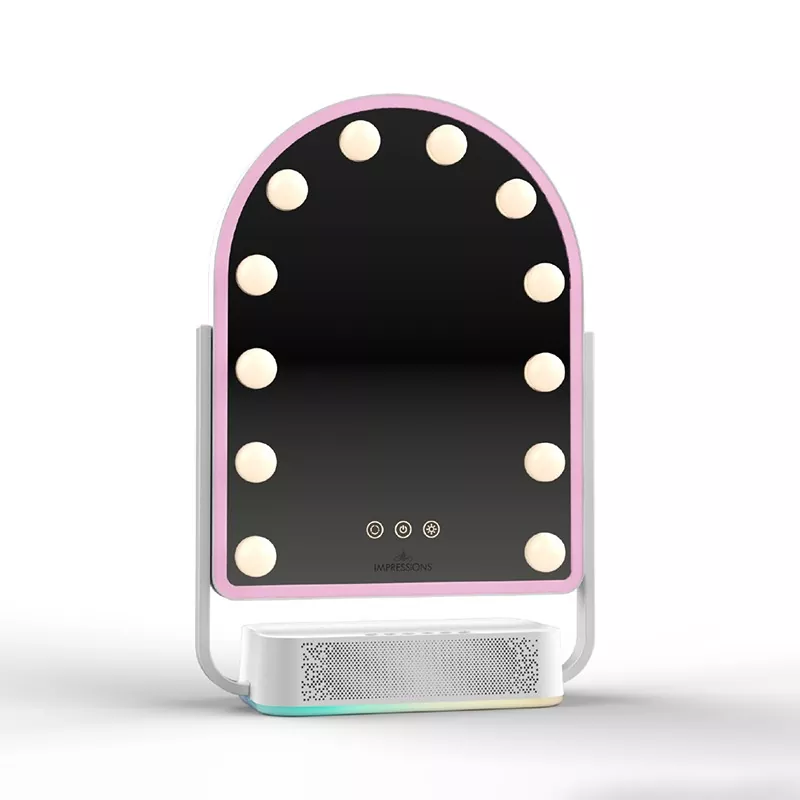
The Technical Foundation: What Makes a Mirror Dimmable?
A Vanity Mirror Bathroom LED relies on an LED driver (power supply) to convert mains AC voltage to low DC voltage. Dimming capability is not determined by the LED strips themselves but by the driver and the control method. There are three mainstream dimming technologies used in the industry:
| Dimming Type | Compatibility | Best For | Cost Indicator |
|---|---|---|---|
| TRIAC (Leading/Trailing Edge) | Works with standard wall dimmers (most common) | Residential retrofits | Moderate |
| 0–10V Dimming | Requires low-voltage control wires | Commercial projects | Higher |
| PWM (Pulse Width Modulation) | Built-in controller or remote | Smart/Bluetooth mirrors | Varies |
For most homeowners, a TRIAC-dimmable Vanity Mirror Bathroom LED is the most practical choice because it integrates seamlessly with existing wall dimmer switches from brands like Lutron or Leviton.
The Critical Rule: Check the Driver Label First
Before connecting your Vanity Mirror Bathroom LED to any dimmer, inspect the driver’s specification sheet or physical label. Look for explicit wording such as “Dimmable” or “TRIAC compatible.” If the label says “Non-dimmable” or lacks any dimming symbol, do not proceed.
At SYNST, all our dimmable Vanity Mirror Bathroom LED models clearly mark the dimming type on the driver housing and include a compatibility list for popular dimmer brands. Using a mismatched dimmer (e.g., a leading-edge dimmer on a trailing-edge driver) causes audible buzzing and unstable light output.
Step-by-Step Wiring Checklist for Safe Installation
-
Turn off power at the circuit breaker – never work on live wiring.
-
Verify your wall dimmer is rated for LED loads (minimum wattage matters – most LED dimmers require at least 5–10W load to function properly).
-
Match the dimmer type to the driver’s specification (leading-edge vs. trailing-edge).
-
Connect line, neutral, and ground per the manufacturer’s wiring diagram – a Vanity Mirror Bathroom LED with a built-in driver typically has pre-wired input leads.
-
Test the dimming range – a quality setup should dim smoothly from 100% down to approximately 5–10% without flicker or drop-out.
Common Issues and Troubleshooting
Even with a compatible dimmer, you may encounter these symptoms. Here is a quick reference table:
| Symptom | Likely Cause | Solution |
|---|---|---|
| Flickering at low levels | Insufficient minimum load | Add a load resistor or use a higher-wattage dimmer |
| Buzzing/humming sound | Dimmer type mismatch | Replace dimmer with trailing-edge (ELV) type |
| Lights turn off abruptly | Dimmer’s trim setting too low | Adjust the low-end trim potentiometer on the dimmer |
| Uneven brightness across mirror | Poor driver quality | Upgrade to a premium driver – SYNST uses constant-current drivers for uniformity |
3 Essential FAQ About Vanity Mirror Bathroom LED Dimming
Q1: Can I use any standard household dimmer switch with my Vanity Mirror Bathroom LED?
A1: No. Standard dimmers are often designed for incandescent or halogen loads, which operate on different electrical principles. For a Vanity Mirror Bathroom LED, you must use an LED-rated dimmer (usually labeled "C.L" or "LED compatible"). Even then, you must confirm that your mirror’s driver supports the same dimming protocol (TRIAC, 0–10V, or PWM). Using a non-LED dimmer will cause rapid flickering, overheating, and may void the warranty. At SYNST, we provide a recommended dimmer model list for every dimmable mirror we sell.
Q2: What happens if I connect my Vanity Mirror Bathroom LED to a dimmer switch but the driver is non-dimmable?
A2: The driver will attempt to regulate voltage despite the chopped AC waveform from the dimmer. This creates excessive stress on the internal capacitors and switching transistors. In the short term (minutes to hours), you will observe visible flickering and audible high-frequency noise. In the medium term (days to weeks), the driver will overheat, leading to premature failure—often with the mirror turning off completely or strobing unpredictably. Replacement drivers are not always standard parts, so this mistake can render your entire Vanity Mirror Bathroom LED unusable. Always check the driver label before installation.
Q3: Does dimming my Vanity Mirror Bathroom LED save energy and extend its lifespan?
A3: Yes, significantly. Dimming reduces the forward current supplied to the LED chips. At 50% brightness, a Vanity Mirror Bathroom LED consumes approximately 40–45% less power (due to driver efficiency curves) and generates substantially less junction heat. LED lifespan is directly inversely correlated with operating temperature—every 10°C reduction in junction temperature can double the rated life (typically from 50,000 to over 80,000 hours). However, avoid running your mirror at extremely low levels (below 5%) for extended periods, as some drivers may enter a discontinuous conduction mode that actually increases ripple current and reduces long-term reliability. The sweet spot for energy savings and longevity is between 20% and 80% dimming range.
Professional Recommendation from SYNST
For a hassle-free experience, SYNST recommends selecting a Vanity Mirror Bathroom LED that includes a pre-installed TRIAC dimmable driver and pairing it with a trailing-edge (ELV) dimmer from a reputable brand. This combination delivers silent operation, smooth 0–100% dimming, and consistent color temperature (we maintain a ±100K tolerance across all dimming levels).
We also offer SYNST mirrors with integrated memory functions—so your last dimmed setting is recalled every time you turn on the light. This feature is particularly appreciated in master bathrooms and hotel projects where user experience matters.
Final Checklist Before Purchase
-
Confirm the product page explicitly states "Dimmable" – if unclear, ask the supplier.
-
Note the dimmer type required (TRIAC, 0–10V, or PWM).
-
Check your existing wall box depth – some smart dimmers require deeper backboxes.
-
Ensure your total LED wattage exceeds the dimmer’s minimum load (usually 5W).
Ready to Upgrade Your Bathroom Lighting?
Choosing the right dimmable Vanity Mirror Bathroom LED doesn't have to be complicated. At SYNST, we engineer every mirror with premium dimmable drivers, rigorous quality control, and clear installation guides. Whether you are renovating a single bathroom or equipping a 50-room hotel, our team provides technical drawings, dimmer compatibility charts, and after-sales support.
Contact us today for a personalized consultation – our lighting engineers will help you select the perfect Vanity Mirror Bathroom LED with the right dimming solution for your project. Visit our website or email our support team directly, and let’s make your bathroom lighting both beautiful and intelligent.