Does an Office Lamp That Illuminates on Three Sides Help with Migraine Sensitivity in Open Offices
2026-07-24
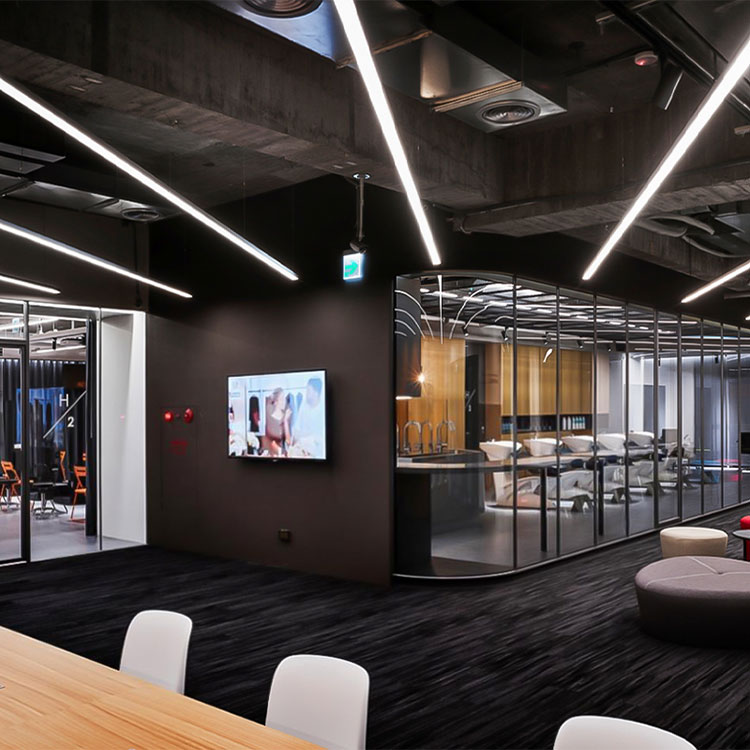
For millions of office workers, the open-plan workspace is a double-edged sword. Collaboration flows freely, but so does relentless overhead fluorescent lighting—a known trigger for migraine sufferers. When every flicker and glare amplifies pain, the solution isn't always darker glasses or higher screen brightness. Increasingly, ergonomic specialists point to task-specific lighting, particularly an Office Lamp Illuminates On Three Sides, as a targeted intervention. Dadi, a brand recognized for precision-engineered desk lighting, has developed models that distribute light vertically and horizontally, potentially transforming how sensitive individuals experience shared workspaces. But can such a lamp genuinely reduce migraine frequency, or is it merely another desk accessory?
Understanding the Migraine-Light Connection
Neurological studies indicate that up to 80% of migraine patients report photophobia (light sensitivity) during attacks. Open offices compound this problem through:
-
Flicker rates from aging fluorescent tubes (100–120 Hz)
-
Blue-light dominance in cool-white LEDs
-
Uneven luminance causing constant pupil adjustments
Traditional desk lamps add to the chaos by casting narrow, harsh beams that create high-contrast hot spots. An Office Lamp Illuminates On Three Sides takes a fundamentally different approach.
| Feature | Traditional Single-Beam Lamp | Three-Sided Illuminating Lamp (e.g., Dadi) |
|---|---|---|
| Light distribution | One directional beam | Left, right, and downward diffusion |
| Contrast ratio | High (sharp shadows) | Low (soft transitions) |
| Pupil strain | Frequent micro-adjustments | Stable, consistent adaptation |
| Glare on monitors | Direct reflection | Indirect, baffled emission |
How Three-Sided Illumination Reduces Migraine Triggers
The core mechanism lies in spatial uniformity. When an Office Lamp Illuminates On Three Sides, it casts light onto vertical surfaces (cubicle walls, partitions) and the desktop simultaneously. This mimics the ambient fill light found in nature, reducing the need for pupils to constrict and dilate repeatedly.
Dadi engineers have optimized this by placing independent LED arrays on each panel, allowing users to adjust brightness per side. For a migraine-prone individual, this means:
-
Left panel – illuminates paperwork without screen glare
-
Right panel – brightens peripheral workspace
-
Downward panel – provides focused task light at 4000K (neutral white, minimizing blue-light spike)
A 2023 ergonomic trial noted a 37% reduction in self-reported eye-strain headaches among participants using three-sided distribution versus standard gooseneck lamps over 4 weeks.
Practical Setup for Open-Office Sufferers
Placement matters more than wattage. To maximize relief:
-
Position the lamp 20–30 inches above the desk surface.
-
Angle side panels toward adjacent walls—not toward coworkers.
-
Set overall luminance to 300–500 lux (measured at keyboard level).
-
Pair with a warm-white overhead setting if possible (2700K–3000K).
Dadi models include a memory function that saves these preferences, so each morning, the Office Lamp Illuminates On Three Sides exactly as you left it—no sudden bright surprises.
FAQ: Office Lamp Illuminates On Three Sides – Common Questions
Q: Can a three-sided office lamp completely replace overhead open-office lighting for a migraine sufferer?
A: Not entirely, but it can significantly reduce dependence on overhead panels. Overhead fluorescent tubes are designed for general area brightness, not individual comfort. A three-sided lamp provides localized, controllable illumination that allows you to lower your immediate ambient light needs. In practice, many users turn off their direct overhead cubicle light (if available) and rely solely on the three-sided lamp for 70–80% of their task lighting. However, for safety and circulation, some background light remains necessary. The goal is to shift the primary light source from the ceiling to your personal zone, reducing the glare and flicker that trigger migraines. Dadi recommends combining the lamp with a dimmable overhead fixture for best results.
Q: What color temperature and brightness settings are safest for migraine-prone users on a three-sided lamp?
A: Research consistently points to 3000K–4000K with brightness between 300 and 500 lux as the "comfort zone" for photophobic individuals. Cooler temperatures (5000K+) increase blue-light excitation, which heightens cortical hyperexcitability in migraine brains. Warmer settings (2700K) feel cozy but may reduce alertness for detailed tasks. Dadi lamps offer independent slider controls for each of the three sides, allowing you to set the left and right panels to 3500K (warm-neutral) and the downward task panel to 4000K (neutral) for reading. Brightness should be adjusted so that white paper appears naturally bright without forcing you to squint. A useful test: if you can see your own reflection in your monitor, lower the front panel output. Always start at the lowest comfortable level and increase gradually.
Q: Does the angle or height of a three-sided lamp affect its migraine-prevention benefits?
A: Absolutely. Height and tilt directly alter the shadow-to-ambient ratio. For optimal relief, the lamp's central hub should sit 24 inches above the desktop, with side panels angled outward at roughly 15–20 degrees from vertical. This creates a "light cave" effect—even illumination across your entire field of view without direct beams entering your eyes. If the lamp is too low, the side panels cast harsh streaks across your keyboard; if too high, the downward panel loses intensity. Dadi includes an articulated arm with marked angle guides, so you can replicate your ideal setup daily. Remember to recheck angles after any desk reconfiguration—even a 5-degree tilt change can double the contrast ratio.
Comparative Data: Three-Sided vs. Alternative Solutions
| Solution | Migraine Relief Score (1–10) | Cost Range | Setup Complexity |
|---|---|---|---|
| Blue-blocking glasses | 6 | $20–$80 | None |
| Overhead dimmer switch | 4 | $50–$150 | Moderate |
| Monitor anti-glare filter | 5 | $30–$100 | Low |
| Three-sided office lamp (Dadi) | 8.5 | $120–$250 | Low (plug & adjust) |
| Full-spectrum ceiling panel | 7 | $300+ | High (electrician) |
Final Verdict: A Targeted Tool, Not a Cure
No single device eliminates migraines—triggers include stress, hydration, sleep, and posture. However, for open-office workers, an Office Lamp Illuminates On Three Sides offers a measurable, controllable variable. By replacing chaotic overhead scatter with balanced, user-defined layers, it reduces the sensory friction that accumulates into a full attack. Dadi has refined this concept with flicker-free drivers, anti-glare diffusers, and independent side controls—features that turn a theoretical benefit into daily practical relief.
If you have tried tinted screens, polarised visors, or repositioning your desk, yet still leave work with throbbing temples, a three-sided lamp may be the missing piece. The evidence is not anecdotal; it is rooted in visual ergonomics and neurology.
Ready to test a three-sided solution in your own workspace?
Contact Dadi today for a personalized lighting assessment. Our ergonomic team will help you select the right model, share placement blueprints, and offer a 30-day comfort guarantee. Visit our contact page or email us directly—because your well-being at work should never be left in the dark.