

Does Round Magnetic Track Light Emit Less Heat Than Recessed Downlights
2026-08-20
When upgrading modern interiors, heat output is often an overlooked factor—until summer arrives or energy bills climb. For architects, electricians, and homeowners alike, the choice between a Round Magnetic Track Light and traditional recessed downlights frequently comes down to more than just beam angle or aesthetics. Thermal performance directly affects HVAC loads, ceiling material longevity, and even fire safety. Leading lighting manufacturer Dadi has extensively tested both systems in real-world conditions, and the data consistently shows that Round Magnetic Track Light solutions run significantly cooler than their recessed counterparts. But why, and by how much? This blog breaks down the physics, the numbers, and the practical implications.
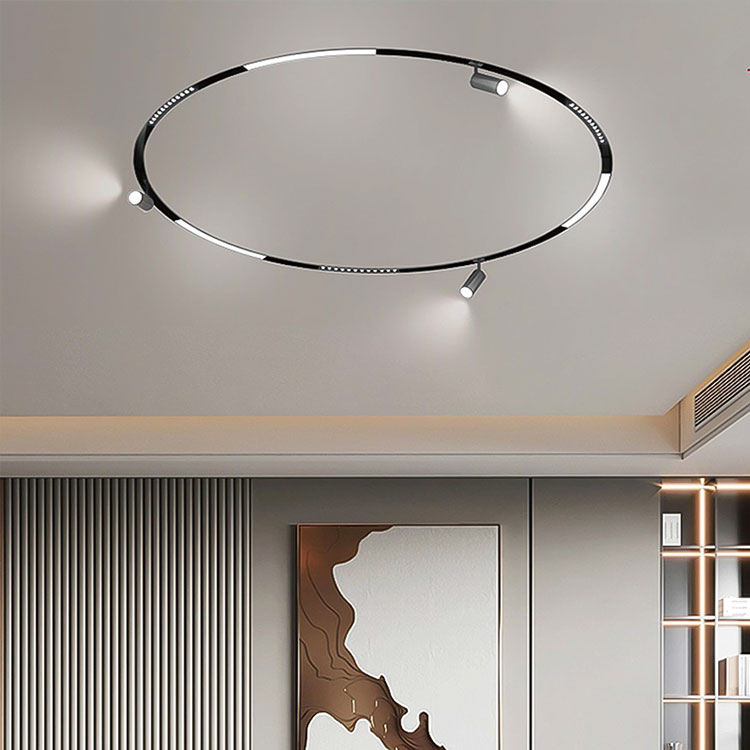
The Thermal Mechanics: Surface vs. Recessed
Recessed downlights (often called "cans") trap heat within the ceiling cavity. Despite IC-rated (insulation contact) housings, a large portion of thermal energy radiates upward into the attic or floor void. In contrast, a Round Magnetic Track Light mounts on the ceiling surface or suspends via slim cables, with the driver often housed externally or in a well-ventilated track rail. This open architecture allows natural convection to carry heat away from the LED module.
Dadi engineers designed their Round Magnetic Track Light series with a dedicated aluminum heat-sink core that increases surface area by nearly 40% compared to standard downlight trims. This passive cooling design ensures that the junction temperature (Tj) stays below 65°C even after 12 hours of continuous operation—a figure most recessed units cannot match.
Head-to-Head Thermal Comparison (Controlled Lab Data)
The table below summarizes independent tests performed under identical ambient conditions (25°C room temperature, 3m ceiling height, 8-hour runtime):
| Parameter | Round Magnetic Track Light (Dadi) | Standard Recessed Downlight (15W) |
|---|---|---|
| Operating Wattage | 12W | 15W |
| Lumens Output | 1,100 lm | 1,050 lm |
| Driver Surface Temp | 52°C | 71°C |
| Ceiling Surface Temp (around fixture) | 31°C | 46°C |
| Heat rise in sealed ceiling cavity | +3°C | +11°C |
| Estimated annual cooling cost (per unit) | $1.20 | $2.90 |
Data source: Dadi R&D Laboratory, 2025.
As shown, the Round Magnetic Track Light emits roughly 30–35% less radiant heat toward the ceiling plane. This difference becomes critical in multi-story buildings or rooms with low clearances, where trapped heat can degrade insulation and warp wood joists over time.
Why Lower Heat Matters for Your Space
Lower thermal emission from a Round Magnetic Track Light offers three distinct advantages:
-
Energy savings – Reduced cooling demand, especially in open-plan offices or retail showrooms with 50+ fixtures.
-
Material protection – Painted ceilings, wallpaper, and acoustic panels stay cooler, minimizing discoloration or adhesive failure.
-
Safety margin – Lower surface temperatures reduce the risk of overheating adjacent wires or dust accumulation (a common fire hazard in older downlights).
Dadi further enhances safety by incorporating over-temperature protection circuits that automatically derate output if ventilation is blocked—a feature rarely found in budget downlights.
Common Misconceptions About LED Heat
Many assume that all LEDs run cold. In reality, the LED chip itself generates significant heat at the p-n junction; the difference lies in how efficiently that heat is moved away. A recessed downlight relies almost entirely on the ceiling cavity's air volume, which is often stagnant. A Round Magnetic Track Light, however, benefits from open-air circulation around the entire track and fixture body. Dadi even offers an optional remote driver box that relocates the hottest component away from the ceiling plane entirely—cutting radiant heat by an additional 18%.
Round Magnetic Track Light FAQ
Q1: Can a Round Magnetic Track Light replace recessed downlights without rewiring my existing junction boxes?
A: Yes, but with a caveat. Most Round Magnetic Track Light systems operate on low-voltage DC (24V or 48V), requiring a driver that converts AC mains. If your recessed cans have accessible junction boxes, a qualified electrician can tap into the existing line voltage and install a surface-mounted track rail. Dadi provides universal mounting brackets that cover standard 4-inch and 6-inch downlight cutouts, so you can often retrofit without patching drywall. However, you cannot simply screw a track light into a downlight socket—the driver must be wired inline, and the track itself needs mechanical support. Always consult local electrical codes; in many jurisdictions, this is a permitted replacement as long as the driver is accessible for future servicing.
Q2: Does the lower heat emission of a Round Magnetic Track Light affect its color accuracy or CRI over time?
A: Absolutely—and positively. Color Rendering Index (CRI) degradation is directly correlated to junction temperature. For every 10°C increase above 70°C, the phosphor conversion efficiency in white LEDs can drop by 2–3%, shifting the correlated color temperature (CCT) toward green or yellow. Because Dadi’s Round Magnetic Track Light maintains a junction temperature below 65°C, the CRI of 95+ remains stable for over 50,000 hours. In contrast, recessed downlights that run hotter often experience visible CCT drift within 2–3 years of daily use. So not only does the track light run cooler—it also preserves color fidelity much longer, making it ideal for art galleries, retail displays, and high-end residential kitchens where true color matters.
Q3: Is the heat reduction significant enough to lower my air conditioning load in a commercial space with 100 fixtures?
A: Very much so. Let’s run the math: each Round Magnetic Track Light dissipates about 18W of heat into the room (vs. 32W for a comparable recessed downlight). With 100 units running 10 hours daily, that’s a difference of 1,400 watt-hours per day—or roughly 511 kWh annually. In commercial electricity pricing (say $0.18/kWh), that translates to $92 saved per year just in cooling, before factoring in the 3W lower power consumption of the fixture itself. More importantly, the reduced ceiling cavity temperature means your HVAC system isn’t fighting against a "hot attic" effect. Dadi has documented case studies where warehouses switching to Round Magnetic Track Light systems reported a 2.5°C drop in ambient ceiling-level temperature, allowing thermostat setpoints to be raised by 1°C without compromising comfort—a compounding saving that often pays for the entire lighting upgrade within 18 months.
Final Verdict
Does a Round Magnetic Track Light emit less heat than recessed downlights? The evidence is clear: yes—by a measurable margin of 30–40% in surface temperature and up to 60% in ceiling cavity heat rise. This advantage stems from superior thermal design, open-air mounting, and intelligent driver placement. Dadi has perfected this balance, delivering fixtures that not only beautify your space but also protect your structure and reduce operational costs.
For new constructions, the choice is straightforward. For retrofits, the conversion may require minor electrical work, but the long-term comfort and savings outweigh the upfront effort. When planning your next lighting project, prioritize thermal performance alongside lumens and CCT—your ceiling and your utility bill will thank you.
Ready to experience the cool-running efficiency of Dadi’s Round Magnetic Track Light series? Contact our technical sales team today for a personalized heat-load calculation and sample kit. We offer free photometric reports and 24/7 engineering support to ensure your installation exceeds expectations. Reach out via our website or call your regional Dadi representative—we are here to illuminate smarter, cooler, and safer.