

How Do Segment LCD Displays Deliver Reliable, Low-Power Visual Performance for Modern Devices?
2025-12-03
A Segment LCD Display is a liquid crystal module designed with pre-defined numeric, alphabetic, or symbolic segments that can be individually activated to form clear, stable visual information. Unlike dot-matrix LCDs, segment-based displays rely on fixed layouts that offer exceptional clarity, low-energy consumption, and long-term operational reliability.
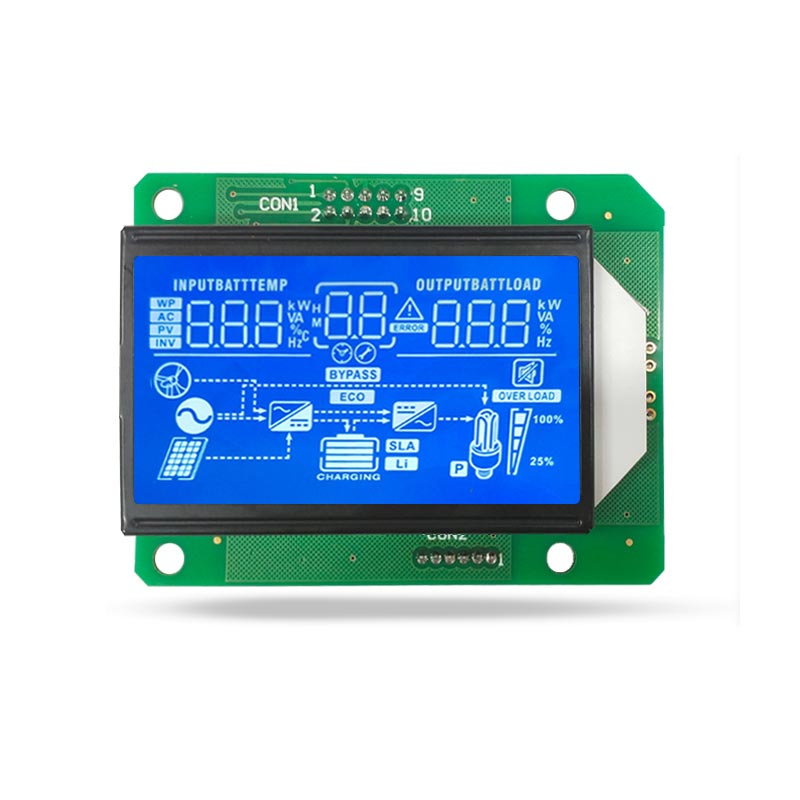
Segment LCD technology continues to dominate sectors like home appliances, meters, industrial instruments, medical devices, and handheld electronics. Because of its customizable layouts, excellent sunlight readability, and ultra-low power requirements, the technology addresses both cost-sensitive and reliability-driven applications. This article will also analyze how segment displays are evolving, what technical parameters buyers should evaluate, how the display operates, and how future trends are shaping the industry.
Below is a detailed parameter table that reflects the typical configuration options for high-quality Segment LCD Displays used across consumer, industrial, and automotive applications:
Segment LCD Display Technical Parameters
| Category | Parameter Options |
|---|---|
| Display Type | TN, HTN, STN, FSTN, VA |
| Operating Voltage | 3.0V – 12V (customizable based on driver IC) |
| Operating Temperature | -20°C to +70°C / -30°C to +80°C (wide temperature optional) |
| Storage Temperature | -30°C to +80°C / -40°C to +90°C |
| Backlight Options | LED backlight (white, blue, yellow-green, red), EL backlight optional |
| Polarizer Mode | Reflective / Transmissive / Transflective |
| Viewing Angle | 6:00 / 12:00 / custom wide-angle |
| Custom Segments | Numeric, alphabetic, icons, bar graphs, symbols |
| Driver Options | Integrated driver IC or external driver |
| Interface | I²C, SPI, parallel, or direct segment pin connection |
| Brightness | Based on backlight type and polarizer design |
| Lifetime | Over 50,000 hours (backlight), LCD cell >100,000 hours |
| Glass Thickness | 0.55mm – 3.0mm |
| Shape | Rectangular, square, round, or fully customized outline |
| Additional Features | Anti-glare, anti-UV coating, wide-temperature liquid crystal |
How Do Segment LCD Displays Achieve Accurate Visual Output With Minimal Power Consumption?
Segment LCD modules operate through the alignment and manipulation of liquid crystal molecules under an electric field. When voltage is applied to specific segments, the molecules shift orientation and alter the passage of light, allowing characters or icons to appear. Their segmented structure eliminates the need for complex pixel matrices, reducing both driver complexity and overall energy usage.
How the Core Mechanisms Work
-
Segment Activation Technology
The display comprises a front and rear glass panel, each etched with transparent conductive patterns. When voltage is applied, only selected segments become visible, enabling straightforward yet precise information presentation. -
Polarizer Functionality
The polarizer determines how ambient or backlight illumination interacts with the liquid crystal layer. Reflective designs allow operation without a backlight—ideal for battery-powered devices. -
Backlight Efficiency
LED-based backlights offer long life, low heat generation, and stable brightness, ensuring consistent readability across varying environments. -
Driving IC and Signal Control
Depending on design, displays can include an onboard driver IC or rely on an external microcontroller. Lower duty and bias ratios improve contrast and stability. -
Wide Temperature Adaptation
Industrial-grade liquid crystal materials maintain stable viscosity and optical performance across extreme temperatures, ensuring reliability in challenging environments such as outdoor meters and automotive dashboards.
Why Energy Efficiency Matters
Segment LCD displays operate at micro-power levels, making them especially valuable in devices that must run continuously for years on a single battery. Their reflective and transflective structures can function effectively with ambient light alone, eliminating unnecessary power draw.
How These Displays Enhance Product Reliability
-
No need for high-refresh graphics cycles
-
Minimal electromagnetic interference
-
Long operational lifespans due to robust LCD cell construction
-
High contrast stability under sunlight and low-light conditions
This reliability explains why segment displays remain a cornerstone of energy meters, smart home panels, medical equipment, industrial sensors, and vehicle climate control systems.
How Are Segment LCD Displays Evolving and What Trends Will Shape Their Future Applications?
Although segment LCD technology is well-established, it continues to evolve in response to new design expectations, energy standards, and product customization requirements.
1. Increasing Adoption of VA (Vertical Alignment) LCD Technology
VA displays offer deeper blacks, sharper contrast, and superior viewing angles compared to TN or STN. This makes them ideal for premium appliances, automotive interfaces, and user-centric industrial equipment.
2. Integration With Smart Electronics
Modern devices increasingly demand multi-function displays integrated with sensors, wireless communication, and embedded processors. Segment LCDs with built-in drivers and low-pin-count interfaces simplify integration into compact electronics.
3. Expansion of Ultra-Low-Power Solutions
Manufacturers continue to refine liquid crystal materials and driving circuits to further minimize energy consumption, enabling multi-year battery life in IoT devices, remote sensors, and handheld instruments.
4. Trend Toward Custom-Shaped Glass Designs
Innovative product designers request non-traditional shapes and unique segment arrangements. Custom-cut glass and icon-rich layouts are becoming standard for brand-specific interfaces.
5. Enhanced Durability and Environmental Resistance
Ongoing advancements in UV protection, humidity resistance, and ruggedized construction allow segment displays to perform reliably outdoors, in industrial environments, and in long-term continuous operation.
These trends indicate a future where Segment LCD Displays remain a highly efficient, customizable, and dependable solution across industries, even as OLED and TFT technologies grow in popularity.
How to Choose the Right Segment LCD Display and What Questions Common Buyers Ask?
Selecting the right segment LCD display depends on matching product requirements with precise optical, mechanical, and electronic parameters. Evaluating aspects such as display type, temperature rating, backlight needs, and viewing angle is crucial for ensuring long-term performance.
Key Considerations When Choosing a Segment LCD
-
Application environment
Harsh outdoor conditions require wide-temperature and anti-UV materials. -
Power supply limitations
Battery-powered devices benefit from reflective polarizers and low-duty drivers. -
Readability expectations
High-contrast VA displays enhance clarity and user experience. -
Integration method
Choose integrated driver ICs if board space is limited. -
Custom graphic needs
Icons, symbols, and bar graphs should reflect the intended UI layout. -
Lifespan requirements
Select displays with high backlight lifetime and durable sealing designs.
Common Questions and Answers
Q1: How does a segment LCD differ from a dot-matrix LCD?
A segment LCD displays predetermined icons, digits, and symbols, while a dot-matrix LCD uses a grid of pixels to show flexible graphics. Segment displays are more power-efficient, simpler to control, and ideal for fixed-format interfaces. Dot-matrix displays provide greater graphical freedom but require more complex driving systems and consume more energy.
Q2: How long can a segment LCD operate under continuous use?
The LCD cell itself typically lasts over 100,000 hours, while LED backlights often reach 50,000 hours or more. Environmental conditions such as temperature, humidity, and UV exposure can affect longevity, but well-designed displays maintain stable performance for many years without degradation.
Segment LCD Displays remain a powerful, dependable, and energy-efficient solution in a world driven by smart electronics and 24/7 operational demands. Their stable performance, customizable layouts, broad temperature tolerance, and low-power requirements make them indispensable across home appliances, industrial controls, medical devices, and next-generation IoT equipment. As technological advancements continue, the adoption of VA materials, improved drivers, and custom-designed glass shapes ensures that segment LCDs will keep evolving to meet new design and efficiency standards.
Manufacturers seeking high-quality, customizable, and long-life Segment LCD Displays can benefit from partnering with a professional and experienced supplier such as JINGDA-DISPLAY, a company known for precision engineering and reliable production capabilities. For tailored solutions or consultation regarding display design and integration, contact us to explore how the right Segment LCD Display can elevate your next project.