

How Does a Flat Panel Lighting Guide Plate Improve LED Light Distribution?
2026-03-11
Modern LED panel lighting systems require highly efficient optical components to deliver smooth, uniform illumination. One of the most important parts inside these systems is the Flat Panel Lighting Guide Plate. Without it, LED lights would produce uneven brightness, hot spots, and poor visual comfort.
A lighting guide plate redistributes light emitted from LEDs and spreads it evenly across the panel surface. This technology allows manufacturers to create ultra-thin lighting fixtures used in offices, hospitals, commercial buildings, and residential spaces.
This guide explains how a Flat Panel Lighting Guide Plate works, why it is essential for LED lighting systems, and how manufacturers select the right plate for optimal performance.
Article Summary
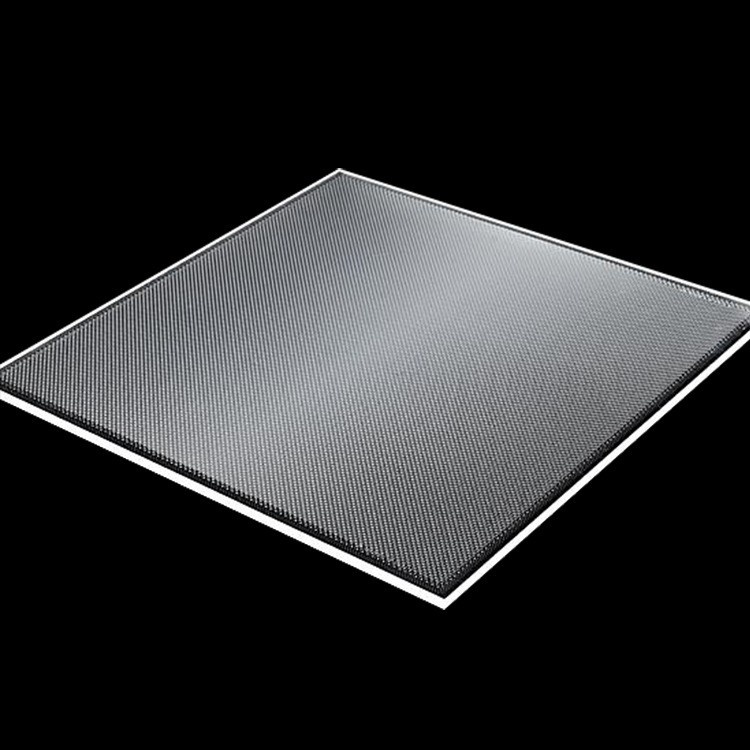
A Flat Panel Lighting Guide Plate (LGP) is a precision optical plate used in edge-lit LED panel lights to distribute light evenly across a surface. It functions by redirecting light through internal reflection and micro-dot structures that scatter light uniformly. High-quality guide plates improve brightness consistency, reduce glare, enhance energy efficiency, and enable ultra-thin lighting designs. This article explores the working principle, structure, materials, advantages, applications, and key considerations when choosing a guide plate.
Table of Contents
- 1. What Is a Flat Panel Lighting Guide Plate?
- 2. How Does a Lighting Guide Plate Work?
- 3. Key Structural Components
- 4. Materials Used in Light Guide Plates
- 5. Advantages of Flat Panel Lighting Guide Plates
- 6. Typical Applications
- 7. How to Choose the Right Guide Plate
- 8. FAQ
1. What Is a Flat Panel Lighting Guide Plate?
A Flat Panel Lighting Guide Plate is a transparent optical panel designed to guide and distribute light from LED sources across a flat lighting surface. It is most commonly used in edge-lit LED panels, where LED strips are installed along the edges of the plate rather than behind the panel.
Instead of emitting light directly downward, LEDs inject light into the side of the guide plate. The plate then redistributes the light internally until it exits uniformly across the surface.
This technology allows manufacturers to produce lighting panels that are:
- Ultra-thin
- Energy efficient
- Uniformly illuminated
- Visually comfortable
Because of these benefits, guide plates are widely used in ceiling lighting systems, backlit advertising displays, and architectural lighting fixtures.
2. How Does a Lighting Guide Plate Work?
The working principle of a lighting guide plate is based on total internal reflection and controlled light scattering.
When LEDs emit light into the edge of the plate, the light travels through the transparent material and becomes trapped inside due to internal reflection. Special micro-structures on the plate surface gradually redirect this trapped light downward.
The process can be simplified into several steps:
- LED chips emit light into the edge of the guide plate.
- The transparent plate channels the light internally.
- Micro-dot patterns scatter the light outward.
- A diffuser layer spreads the light evenly.
- The panel surface emits uniform illumination.
This design ensures that the entire panel surface emits consistent brightness instead of concentrating light near the LED sources.
3. Key Structural Components
An LED panel lighting system typically contains several optical layers working together with the guide plate.
| Component | Function |
|---|---|
| LED Light Source | Provides the initial light input along the plate edges |
| Light Guide Plate | Channels and distributes light evenly across the panel |
| Reflective Sheet | Reflects escaped light back into the plate for efficiency |
| Diffuser Plate | Softens the light and removes bright spots |
| Prism Film | Enhances brightness and directs light forward |
Among these components, the guide plate plays the most important role in ensuring uniform illumination.
4. Materials Used in Light Guide Plates
The performance of a lighting guide plate depends heavily on the material used in its construction. Manufacturers typically use highly transparent thermoplastic materials that allow efficient light transmission.
The two most common materials include:
- PMMA (Acrylic) – High optical clarity and excellent light transmission
- Polycarbonate (PC) – Strong impact resistance and durability
| Material | Light Transmission | Advantages |
|---|---|---|
| PMMA | Up to 92% | Excellent clarity, stable optical performance |
| Polycarbonate | 88-90% | High impact strength and heat resistance |
PMMA is the most commonly used material because of its superior optical performance and stable diffusion characteristics.
5. Advantages of Flat Panel Lighting Guide Plates
High-quality guide plates provide multiple advantages for LED lighting systems.
- Uniform Light Distribution – Eliminates hot spots and dark areas
- Ultra-Thin Design – Enables slim lighting fixtures
- Improved Energy Efficiency – Maximizes light output
- Enhanced Visual Comfort – Reduces glare and eye strain
- Long Service Life – Maintains stable optical performance
These advantages are the reason why modern architectural lighting relies heavily on precision-engineered guide plates.
Manufacturers such as Jinmingwei focus on high-precision micro-dot technology and high-transparency materials to achieve consistent light diffusion and long-term durability.
6. Typical Applications
Flat panel lighting guide plates are widely used across various lighting industries.
- Office ceiling LED panel lights
- Hospital and medical lighting
- Retail store illumination
- Commercial building lighting systems
- Advertising light boxes
- Architectural interior lighting
Because of their slim profile and uniform brightness, these panels are increasingly replacing traditional fluorescent lighting fixtures.
7. How to Choose the Right Guide Plate
Selecting the correct guide plate is critical for achieving consistent lighting performance. Several technical factors should be evaluated during product selection.
| Factor | Why It Matters |
|---|---|
| Plate Thickness | Affects brightness distribution and structural stability |
| Micro-Dot Design | Controls light scattering and uniformity |
| Material Transparency | Determines light transmission efficiency |
| Panel Size Compatibility | Ensures even illumination across large surfaces |
| Manufacturing Precision | Impacts long-term optical consistency |
Working with experienced manufacturers ensures that the guide plate design matches the specific lighting requirements of the final product.
8. FAQ
Q1: Why do LED panel lights need a guide plate?
LEDs emit directional light. Without a guide plate, the light would concentrate near the LED strips, creating uneven brightness across the panel.
Q2: What thickness is typical for a light guide plate?
Most LED panel lighting guide plates range between 2mm and 8mm depending on panel size and brightness requirements.
Q3: What is the lifespan of a guide plate?
High-quality PMMA guide plates can maintain stable optical performance for over 50,000 hours when used in standard LED lighting environments.
Q4: Can guide plates be customized?
Yes. Manufacturers often customize plate size, thickness, micro-dot patterns, and materials based on specific lighting design requirements.
Conclusion
A Flat Panel Lighting Guide Plate plays a vital role in modern LED lighting systems by ensuring consistent brightness, improved efficiency, and ultra-thin lighting design. Through advanced optical engineering and precision manufacturing, guide plates transform concentrated LED light into smooth, uniform illumination suitable for a wide range of commercial and architectural applications.
Companies such as Jinmingwei continue to develop high-performance guide plates that improve lighting quality while supporting energy-efficient designs. Selecting the right guide plate is essential for manufacturers aiming to deliver reliable and visually comfortable lighting products.
If you are looking for professional Flat Panel Lighting Guide Plate solutions or customized optical components for your lighting systems, contact us today to discuss your project requirements and discover how our manufacturing expertise can support your product development.