

How Does a Flat Panel Lighting Guide Plate Improve LED Panel Light Uniformity?
2026-03-16
Article Summary
Flat panel lighting has become a standard solution in modern offices, commercial buildings, hospitals, and residential interiors. At the core of this lighting technology lies the Flat Panel Lighting Guide Plate, a component responsible for distributing light evenly across the surface of LED panels. Without it, LED panel lights would show bright spots, shadows, and inconsistent illumination. This article explains how lighting guide plates work, what materials and structures they use, and how businesses can choose the right solution for consistent, high-quality lighting performance.
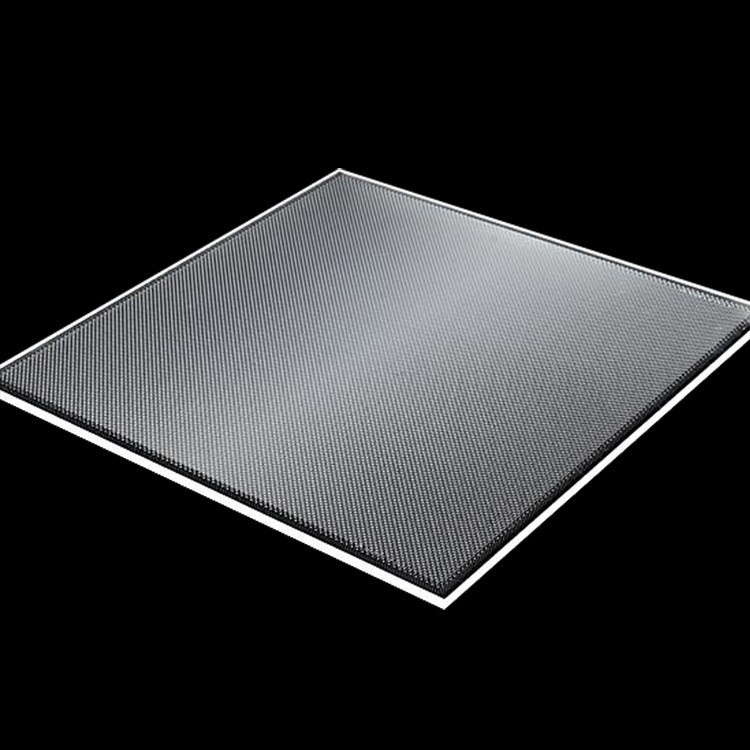
Table of Contents
- Introduction to Flat Panel Lighting Guide Plates
- How a Flat Panel Lighting Guide Plate Works
- Main Materials Used in Lighting Guide Plates
- Key Structural Designs That Improve Light Uniformity
- Performance Parameters to Evaluate When Selecting a Guide Plate
- Common Applications of Flat Panel Lighting Systems
- Advantages of Using High-Quality Guide Plates
- Frequently Asked Questions
- Conclusion
Introduction to Flat Panel Lighting Guide Plates
LED panel lighting is widely used because of its energy efficiency, long service life, and slim structure. However, LED light sources themselves emit light from small, concentrated points. If this light is not properly distributed, the panel surface may show uneven brightness or glare.
This is where a Flat Panel Lighting Guide Plate becomes essential. The guide plate functions as a light-distribution medium that converts point light sources into a uniform surface light output. By guiding and scattering the light throughout the panel, it ensures consistent illumination across the entire lighting surface.
Manufacturers such as Jinmingwei focus on precision optical designs that maximize light efficiency while maintaining stable brightness distribution, making guide plates a crucial component in modern LED panel technology.
How a Flat Panel Lighting Guide Plate Works
A flat panel lighting guide plate operates based on the principle of controlled light diffusion and reflection. LED light sources are usually positioned along one or more edges of the panel. The guide plate captures this edge-injected light and redistributes it evenly across the surface.
The basic working process includes several stages:
- LED chips emit light from the side of the panel.
- The light enters the guide plate through the edge.
- Internal microstructures guide the light across the plate.
- Light scattering patterns redirect the light upward.
- A diffuser layer spreads the light uniformly across the panel surface.
This optical path transforms directional LED light into a broad, evenly illuminated surface. The guide plate essentially acts as a bridge between the LED light source and the final lighting environment.
Main Materials Used in Lighting Guide Plates
The material of the guide plate directly affects light transmission efficiency, durability, and optical performance. Two materials dominate the industry.
| Material | Characteristics | Typical Applications |
| PMMA (Acrylic) | High transparency, excellent optical clarity, strong light transmission | High-end LED panels, commercial lighting |
| PS (Polystyrene) | Lower production cost, lightweight structure | Budget lighting panels and large-scale installations |
| Optical Acrylic Composite | Improved mechanical strength and light diffusion | Industrial and architectural lighting systems |
PMMA is generally preferred for premium lighting applications because its light transmission rate can exceed 92%, which significantly improves brightness uniformity.
Key Structural Designs That Improve Light Uniformity
The internal optical structure is the most critical element of a flat panel lighting guide plate. Manufacturers use precision laser engraving or printing techniques to create microscopic patterns across the plate.
Common structural designs include:
- Dot pattern distribution – Gradually increasing dot density from the light source to the far end ensures balanced brightness.
- V-groove structures – Direct light upward through reflective angles.
- Laser micro-engraving – High precision patterning for premium lighting panels.
- Silk-screen printing patterns – Cost-effective solution for large-scale production.
These microstructures control how much light escapes at each point of the plate. Areas farther from the LED source typically contain denser scattering patterns to maintain brightness balance.
Performance Parameters to Evaluate When Selecting a Guide Plate
When selecting a flat panel lighting guide plate, several technical indicators should be carefully considered.
| Parameter | Description |
| Light Transmission Rate | Determines how much LED light passes through the plate without loss |
| Uniformity Ratio | Measures brightness consistency across the entire panel surface |
| Thickness | Affects structural strength and compatibility with slim panel designs |
| Optical Pattern Precision | Controls light extraction efficiency |
| Heat Resistance | Ensures long-term stability in high-temperature environments |
High-precision guide plates designed by experienced manufacturers such as Jinmingwei can significantly improve both luminous efficiency and panel lifespan.
Common Applications of Flat Panel Lighting Systems
Flat panel lighting guide plates support a wide range of indoor and commercial lighting applications.
- Office lighting systems
- Retail store illumination
- Hospital and laboratory lighting
- Educational facility lighting
- Hotel and hospitality environments
- Residential ceiling panel lights
Because of their thin profile and uniform brightness, LED panels using guide plate technology are increasingly replacing traditional fluorescent ceiling fixtures.
Advantages of Using High-Quality Guide Plates
Using a well-designed lighting guide plate provides several operational and economic benefits.
- Improved brightness uniformity across the panel
- Reduced glare and visual fatigue
- Higher overall light efficiency
- Lower energy consumption
- Longer service life for lighting systems
- Ultra-thin lighting panel design
These advantages make guide plate technology essential for modern architectural lighting systems that prioritize both visual comfort and energy efficiency.
Frequently Asked Questions
1. What thickness is typically used for a flat panel lighting guide plate?
Most LED panel guide plates range from 2mm to 6mm in thickness depending on panel size and brightness requirements. Larger panels generally require thicker plates for structural stability.
2. Why do some LED panels show uneven brightness?
Uneven brightness usually occurs when the guide plate pattern is poorly designed or manufactured with low precision. Proper optical pattern distribution ensures that light exits the plate evenly.
3. Can guide plates improve LED lighting efficiency?
Yes. High-quality guide plates increase light utilization by directing more LED light toward the panel surface rather than allowing it to dissipate internally.
4. What industries rely most on lighting guide plates?
Lighting guide plates are widely used in architectural lighting, display backlighting, advertising light boxes, and large LED ceiling panel installations.
Conclusion
A Flat Panel Lighting Guide Plate is the optical foundation of modern LED panel lighting. By transforming concentrated LED light into evenly distributed illumination, it ensures consistent brightness, visual comfort, and energy-efficient operation. The choice of material, optical pattern design, and manufacturing precision all play vital roles in achieving superior lighting performance.
With advanced manufacturing techniques and strict quality control, Jinmingwei provides reliable lighting guide plate solutions that support high-performance LED panel systems across multiple industries.
If you are looking for high-quality flat panel lighting guide plates or customized optical solutions for your LED lighting products, contact us today to learn how our engineering team can support your project with reliable manufacturing and professional technical assistance.