
How Multiple Shapes LCD Transforms Display Design for Modern Applications
2026-06-29
Abstract
Multiple Shapes LCD technology represents a significant evolution beyond traditional rectangular display limitations. By enabling customized geometries such as circular, oval, irregular, and segmented forms, it unlocks new possibilities for product designers across automotive, medical, industrial, and consumer electronics sectors. This article explores how Multiple Shapes LCD works, its engineering principles, application scenarios, advantages, challenges, and selection criteria. It also highlights how Shenzhen Cuhub integrates this technology into modern display solutions to meet diverse industry demands.
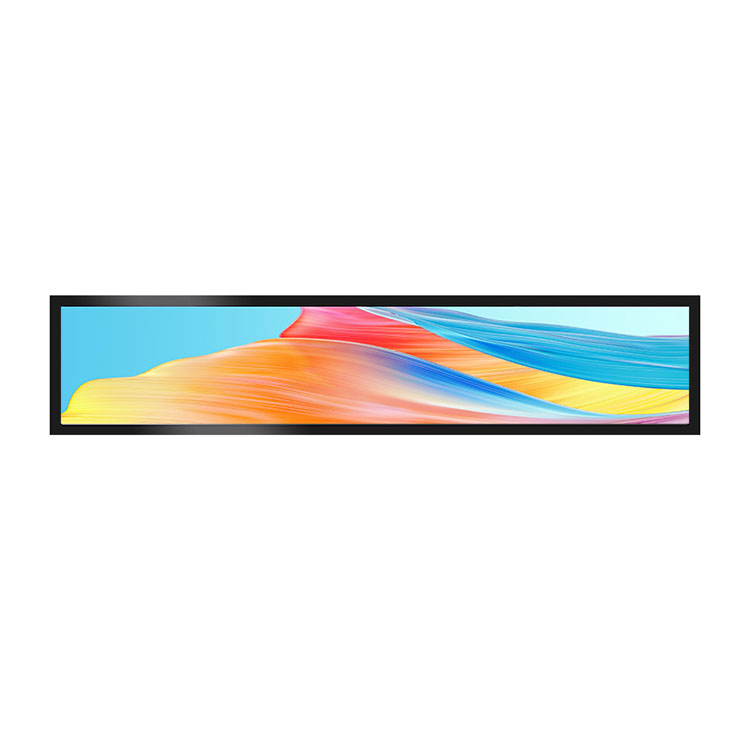
Table of Contents
- 1. Overview of Multiple Shapes LCD
- 2. How Multiple Shapes LCD Works
- 3. Key Advantages
- 4. Industry Applications
- 5. Traditional LCD vs Multiple Shapes LCD
- 6. How to Choose the Right Solution
- 7. Technical Challenges and Considerations
- 8. Frequently Asked Questions
- 9. Conclusion
1. Overview of Multiple Shapes LCD
Multiple Shapes LCD is a specialized display engineering approach that breaks the conventional rectangular boundary of standard LCD panels. Instead of being restricted to fixed 16:9 or 4:3 aspect ratios, these displays can be manufactured in circular, oval, square-cut, or fully customized irregular shapes depending on device requirements.
This flexibility is particularly valuable in industries where user interface integration must align with product structure rather than forcing the product to adapt around a display module. Shenzhen Cuhub has been actively advancing this field by delivering customized LCD modules tailored for smart devices, industrial instruments, and interactive systems.
2. How Multiple Shapes LCD Works
The working principle of Multiple Shapes LCD is based on precision cutting, optimized TFT backplane design, and advanced driver integration. Unlike conventional LCDs, where uniform rectangular pixel matrices are standard, shaped LCDs require careful pixel mapping and circuit layout adjustments.
The process typically includes:
- Custom TFT substrate design: Ensures pixel alignment matches the target shape.
- Laser cutting or mold shaping: Defines the final physical contour of the display.
- Driver IC optimization: Maps image signals accurately across non-standard geometries.
- Edge sealing technology: Protects liquid crystal layers from environmental damage.
This combination of hardware precision and electronic calibration ensures that image integrity remains stable even when the display shape deviates from traditional formats.
3. Key Advantages
Multiple Shapes LCD technology delivers several advantages that directly address design limitations and usability challenges in modern electronic products.
- Enhanced design freedom: Allows product designers to create more visually integrated devices.
- Improved space utilization: Displays fit naturally into compact or irregular device structures.
- Stronger brand identity: Unique shapes enhance product differentiation.
- Better user experience: Interfaces can align with ergonomic product forms.
- High customization capability: Supports industry-specific requirements.
Shenzhen Cuhub leverages these advantages to provide tailored solutions that align with customer product strategies rather than forcing design compromises.
4. Industry Applications
Multiple Shapes LCD is widely adopted across industries that require both functional display output and structural innovation.
- Automotive dashboards: Circular speedometers, curved instrument clusters, and smart control panels.
- Smart home devices: Voice assistants and control hubs with non-traditional UI shapes.
- Medical equipment: Compact diagnostic interfaces with optimized readability.
- Industrial control systems: Rugged displays designed for constrained panel layouts.
- Wearable technology: Round or capsule-shaped screens for fitness and health monitoring devices.
These applications demonstrate how Multiple Shapes LCD enhances both aesthetic value and functional usability.
5. Traditional LCD vs Multiple Shapes LCD
| Feature | Traditional LCD | Multiple Shapes LCD |
|---|---|---|
| Shape Flexibility | Fixed rectangular format | Custom shapes (circular, oval, irregular) |
| Design Integration | Requires adaptation of product housing | Adapts to product structure |
| Customization Level | Limited | High |
| Manufacturing Complexity | Standardized process | Advanced precision engineering |
| Application Scope | General consumer electronics | Specialized industrial and smart devices |
6. How to Choose the Right Solution
Selecting the appropriate Multiple Shapes LCD solution requires careful consideration of several technical and commercial factors. Shenzhen Cuhub recommends evaluating the following criteria:
- Product structure compatibility: Ensure the display shape matches enclosure design.
- Resolution requirements: Higher resolution may be required for complex UI layouts.
- Environmental conditions: Temperature, humidity, and durability expectations.
- Power consumption constraints: Especially important for portable devices.
- Interface compatibility: SPI, RGB, LVDS, or MIPI interfaces depending on system architecture.
Proper selection ensures optimal performance and long-term reliability in real-world applications.
7. Technical Challenges and Considerations
Despite its advantages, Multiple Shapes LCD technology introduces certain engineering challenges that must be addressed during design and manufacturing.
- Pixel alignment complexity: Irregular shapes require precise pixel recalibration.
- Higher production cost: Custom tooling increases manufacturing expenses.
- Yield rate control: Non-standard shapes may affect production efficiency.
- Thermal management: Irregular layouts can influence heat distribution.
Shenzhen Cuhub mitigates these challenges through advanced production processes and strict quality control systems, ensuring stable performance across different application environments.
8. Frequently Asked Questions
Q1: What makes Multiple Shapes LCD different from standard LCD?
It allows non-rectangular display designs, enabling integration into uniquely shaped devices without compromising visual output quality.
Q2: Is Multiple Shapes LCD suitable for mass production?
Yes, although it requires specialized tooling, mature manufacturing processes enable scalable production for industrial use.
Q3: Can Shenzhen Cuhub customize LCD shapes for specific projects?
Yes, Shenzhen Cuhub provides full customization services including shape design, interface configuration, and module integration.
Q4: Where is Multiple Shapes LCD most commonly used?
It is widely used in automotive systems, medical devices, smart home products, industrial equipment, and wearable electronics.
9. Conclusion
Multiple Shapes LCD technology is reshaping how modern devices are designed and experienced. By breaking the limitations of traditional display formats, it enables deeper integration between hardware structure and user interface design. From automotive innovation to advanced medical systems, its impact is expanding rapidly across industries.
Shenzhen Cuhub continues to drive innovation in this field by delivering high-precision, customizable display solutions that meet evolving market demands. With strong engineering capabilities and flexible manufacturing support, it provides reliable options for businesses seeking to enhance product differentiation through advanced display technology.
If you are exploring custom display solutions or planning a new product design, Shenzhen Cuhub is ready to support your development needs. contact us today to discuss your project requirements and discover how Multiple Shapes LCD can elevate your product experience.