
What Are the Primary Manufacturing Challenges Involved in Producing LED Micro-Grating Screens
2026-01-20
In the competitive landscape of advanced display technology, the LED micro-grating screen stands out for its superior optical control and clarity. As pioneers at Allenson, we understand that achieving these remarkable visual properties requires navigating a complex manufacturing process. The journey from concept to a flawless LED micro-grating screen is fraught with intricate challenges that demand precision engineering and innovative solutions. Let's delve into the primary hurdles manufacturers face.
The core challenges can be categorized into three main areas: Precision Fabrication, Material Integration, and Quality Assurance.
Key Manufacturing Hurdles:
-
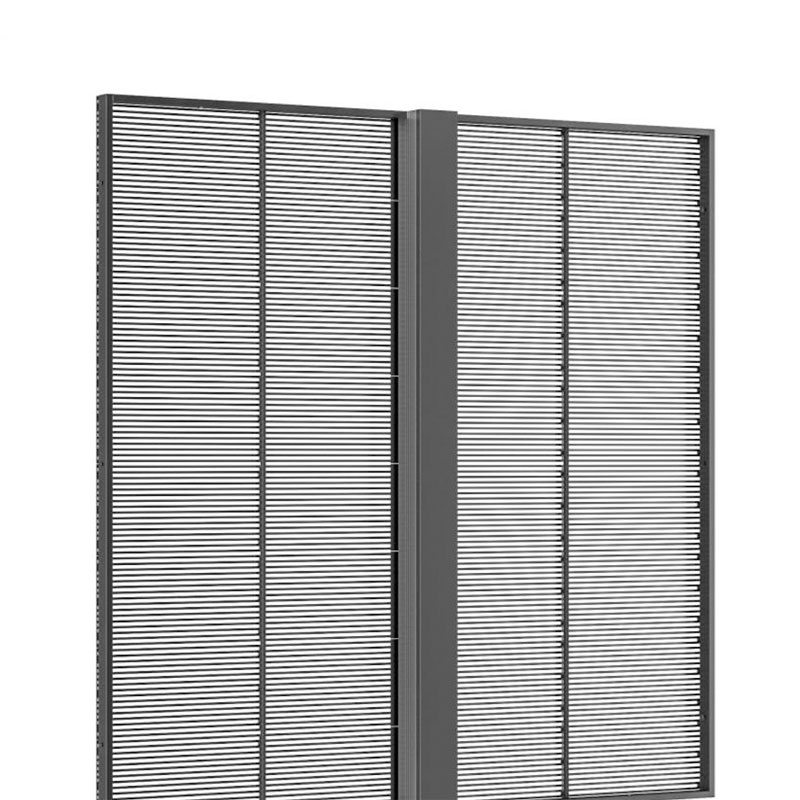
Ultra-Precise Grating Fabrication: Etching the microscopic grating structure with sub-micron accuracy across large panels is extremely difficult. Any inconsistency leads to Moiré patterns or uneven brightness.
-
Alignment and Lamination: Perfectly aligning the micro-grating film with the underlying LED pixel array is critical. A misalignment of even a few microns can severely degrade image quality and viewing angles.
-
Material Compatibility and Stability: The materials used for the grating layer, adhesives, and LED components must have matching thermal expansion coefficients. Otherwise, temperature changes cause delamination or warping.
-
Yield Rate and Scalability: Combining delicate micro-structures with LED panels inherently lowers production yield. Scaling this precision process for cost-effective mass production remains a significant bottleneck.
Comparative Overview of Core Challenges
| Challenge Category | Specific Issue | Consequence if Unresolved |
|---|---|---|
| Precision Fabrication | Sub-micron grating etching | Visual artifacts, non-uniform light output |
| Assembly & Integration | Pixel-to-grating misalignment | Reduced contrast, color shift, limited viewing angle |
| Material Science | Thermal expansion mismatch | Screen delamination and long-term reliability failure |
LED Micro-Grating Screen FAQ
Q: How does a micro-grating improve an LED screen's performance?
A: The microscopic grating acts as a sophisticated optical filter. It precisely directs light from the LED diodes, significantly reducing unwanted glare and散射 light. This enhances contrast, especially in bright environments, and improves color saturation for a sharper, more comfortable viewing experience.
Q: Are LED micro-grating screens more fragile than standard LED displays?
A: The integrated structure itself is robust. However, the added micro-grating layer and precise lamination process can make the screen module more sensitive during handling and installation. It requires specialized techniques, a key reason to work with an experienced provider like Allenson to ensure proper integration and durability.
Q: What applications benefit most from this technology?
A: Any application demanding high clarity in challenging lighting conditions sees major benefits. This includes control rooms, high-end retail windows, transparent displays, and luxury automotive dashboards where sunlight readability and wide viewing angles are paramount for the LED micro-grating screen.
Mastering these manufacturing challenges is what separates a prototype from a reliable, commercial-grade product. It requires not only advanced equipment but also deep domain expertise in optics, semiconductor processes, and display assembly—a combination that defines Allenson's approach to innovation.
Navigating the complexities of LED micro-grating screen integration into your project doesn't have to be a challenge. Leverage our two decades of expertise in cutting-edge display solutions. Contact us today to discuss how Allenson can help you overcome these manufacturing hurdles and bring your most ambitious visual concepts to life with reliability and excellence.