

An infrared induction lamp combines illumination with infrared motion detection so that lighting can respond automatically when people enter a monitored area. Instead of depending entirely on a wall switch, the lamp can detect changes associated with human movement and activate the light when illumination is needed. After a preset period without detected movement, the light can switch off automatically.
This simple principle solves several everyday problems at once: walking into a dark corridor, leaving outdoor lights running unnecessarily, searching for a switch while carrying something, or maintaining lighting in areas that are occupied only intermittently. PIR-based sensor lighting is widely used because passive infrared detection can identify changes in infrared energy without continuously transmitting a detection signal.
This guide explains how infrared induction lamps work, where they are useful, what specifications matter, how to reduce false triggering, and how to plan a dependable installation. It also examines the practical features buyers should consider when selecting an infrared sensor lighting solution from an experienced manufacturer such as pdlux.
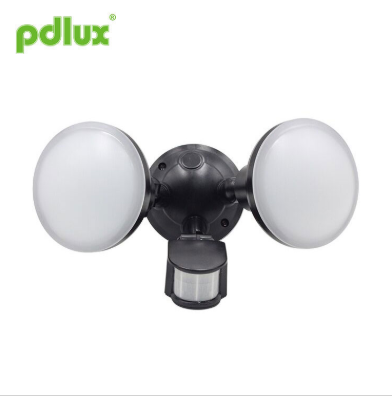
What Is an Infrared Induction Lamp?
An infrared induction lamp is an automated lighting product that integrates a light source with an infrared sensing system. In many practical lighting applications, the sensing element is a passive infrared, or PIR, sensor. The sensor detects changes in infrared radiation within its field of view and sends a signal to a control circuit when movement is identified.
Human bodies naturally emit infrared energy because of their temperature. When a person moves across the sensor's detection zones, the infrared pattern reaching the sensing element changes. The electronic circuit interprets that change and can activate the connected lamp.
The result is a straightforward user experience: enter the detection area, receive illumination automatically, and leave without needing to remember the switch. Pdlux describes infrared induction lamps as a combination of infrared sensing and conventional lighting designed to automate switching while helping reduce unnecessary operation.
How Does an Infrared Induction Lamp Work?
1. The sensor monitors the surrounding area
A PIR sensor continuously monitors infrared energy within its coverage area. Unlike an active sensor that intentionally transmits a signal, a passive infrared sensor receives infrared energy from its environment.
2. Movement creates a detectable infrared change
The sensor is particularly responsive when a warm object, such as a person, moves across different detection zones. This change produces an electrical response from the pyroelectric sensing element, which is then processed by the electronic circuit.
3. The control circuit evaluates the signal
Detection alone does not have to mean that the lamp stays on indefinitely. The control system can combine motion information with settings such as detection sensitivity, illumination level and time delay.
4. The light activates
When the conditions meet the programmed requirements, the switching circuit supplies power to the lamp. Depending on the design, the light can remain illuminated for a predefined period or continue responding to movement.
5. The lamp switches off after inactivity
Once movement is no longer detected and the preset delay expires, the light can turn off automatically. This automatic shutdown is one of the major practical advantages of sensor lighting because users do not have to remember to switch lights off manually.
What Components Shape Its Performance?
A reliable infrared induction lamp is more than a lamp with a sensor attached. Its real-world performance depends on the interaction between several components.
| Component | Main Function | Why It Matters |
|---|---|---|
| PIR sensing element | Detects changes in infrared radiation | Determines motion-detection responsiveness |
| Fresnel lens | Directs infrared energy toward the sensor | Influences coverage pattern and detection zones |
| Control circuit | Processes sensor signals and manages switching | Supports stable and predictable operation |
| Light source | Provides illumination | Affects brightness, efficiency and service life |
| Power supply | Provides suitable electrical power | Influences reliability and compatibility |
| Housing | Protects internal electronics | Important for durability in demanding environments |
The optical design deserves particular attention. A sensor may be technically sensitive, but the overall detection experience can still be poor if the lens pattern, installation height or orientation does not match the intended application.
What Problems Can an Infrared Induction Lamp Solve?
Hands-free operation
Automatic activation is particularly useful when users are carrying groceries, tools, packages or luggage. There is no need to find and operate a switch before entering the illuminated area.
Reduced unnecessary lighting
Conventional lighting can remain on simply because someone forgets to switch it off. Sensor-controlled lighting provides an automatic way to limit operating time in spaces that are used intermittently.
Improved visibility in transitional spaces
Corridors, stairways, entrances and garages can become uncomfortable or hazardous when lighting is delayed. Automatic activation provides illumination as people enter the monitored area.
More convenient building operation
For property managers, offices, apartment buildings and other facilities, automatic lighting can reduce dependence on users remembering small operational tasks.
Better integration with modern lighting design
Sensor technology can be integrated into compact ceiling lights, wall-mounted fixtures, outdoor lights and night lights. Pdlux, for example, offers infrared sensor lighting products alongside PIR sensor modules and other sensor-based lighting solutions.
Where Are Infrared Induction Lamps Used?
The best application is usually an area where people need light temporarily and where manual switching is inconvenient or easily forgotten.
- Residential corridors: useful for automatically lighting passageways during nighttime movement.
- Staircases: provides immediate illumination when a person enters the monitored area.
- Garages: particularly convenient when users arrive carrying bags, equipment or tools.
- Entrances: can improve visibility around doors and access points.
- Storage rooms: prevents lights from being left on after short visits.
- Utility rooms: supports convenient hands-free operation.
- Apartment buildings: suitable for shared spaces with intermittent occupancy.
- Commercial premises: can support automated lighting in corridors, service areas and low-occupancy spaces.
- Outdoor areas: suitable designs can provide automatic illumination around entrances, paths and other access areas.
Pdlux's infrared induction lamp range includes solutions intended for automatic lighting, while its broader sensor-lighting portfolio also includes ceiling sensor lights, outdoor infrared detectors and related products.
What Specifications Should Buyers Check?
Choosing an infrared induction lamp should begin with the application rather than simply selecting the highest sensitivity or brightest lamp. The following specifications have a direct impact on user experience.
| Specification | Question to Ask |
|---|---|
| Detection range | How large is the area that must be monitored? |
| Detection angle | Will movement approach from the front, side or multiple directions? |
| Time delay | How long should the light remain on after the last detected movement? |
| Light-control threshold | Should the lamp operate only in darkness or under a broader range of conditions? |
| Installation height | Does the sensor's recommended mounting height match the location? |
| Power supply | Is the electrical input compatible with the installation? |
| Load capacity | Can the switching system safely handle the intended light load? |
| Environmental rating | Will the product be exposed to dust, humidity, rain or temperature changes? |
As an example of the level of adjustment available in sensor products, a Pdlux infrared sensor switch specification includes adjustable detection range, time setting and light-control settings. Its published example lists a detection range of 1–8 m radius, a 360-degree ceiling detection angle, and adjustable time and illumination thresholds. Actual performance depends on the specific model and installation conditions.
What Causes Unwanted Activation?
One of the most common frustrations with motion-sensor lighting is unexpected activation. This does not necessarily mean the sensor is defective. PIR sensors respond to changes in infrared conditions, and other moving or changing heat sources can sometimes create a trigger.
- Strong temperature changes near the sensor.
- Air-conditioning or ventilation equipment creating moving warm or cool air.
- Animals moving through the detection zone.
- Objects moving because of wind.
- Vehicle movement close to the detection area.
- Strong external light sources or rapidly changing environmental conditions.
- Incorrect sensor orientation or an unsuitable installation location.
Panasonic's sensor-lighting guidance similarly notes that temperature-changing objects, animals, ventilation equipment, vibration, vehicle headlights and other environmental conditions can contribute to unexpected activation.
How Can Installation Improve Performance?
Choose the detection direction carefully
PIR sensors often perform differently depending on how a person crosses their detection zones. A layout where people move across the sensing field can provide a different response from one where they walk directly toward the sensor.
Avoid unstable heat sources
Avoid placing the sensor directly beside equipment that produces changing heat or moving air. HVAC outlets, exhaust systems and other temperature-changing sources can make the environment harder for a PIR sensor to interpret.
Match coverage to the actual space
Excessive detection range is not always an advantage. A sensor that covers an adjacent walkway or road may react to movement that the user never intended to detect. Adjusting the coverage to the required area can make operation more predictable.
Set the time delay according to usage
A short delay may be ideal for a small passageway, while a longer delay can be more convenient in a storage room or stairwell. The right setting depends on how long people normally remain in the space.
Consider ambient-light control
If the lamp includes a light-control function, it can be configured to activate only when the surrounding illumination falls below a defined threshold. This avoids unnecessary activation during daylight or sufficiently bright conditions. Pdlux sensor products provide examples of adjustable light-control functionality.
How Does Infrared Detection Compare with Other Sensor Technologies?
Infrared induction is only one approach to automatic lighting. The best technology depends on the environment, coverage requirements and installation conditions.
| Technology | Basic Detection Method | Common Strength | Important Consideration |
|---|---|---|---|
| PIR / infrared | Detects changes in infrared radiation | Simple, efficient and well suited to human-motion detection | Can be affected by environmental temperature changes |
| Microwave | Uses reflected electromagnetic waves | Can provide broad detection and can work through some non-metallic materials | May require careful control of detection coverage |
| Ultrasonic | Uses reflected sound waves | Useful for occupancy and motion sensing in certain indoor environments | Performance depends on room geometry and environmental conditions |
| Manual switching | User-operated switch | Simple and predictable | Requires user action and can lead to lights being left on |
Pdlux's broader product portfolio includes both infrared and microwave sensor technologies, reflecting the fact that different buildings and applications can benefit from different detection approaches.
What Maintenance Does the System Need?
One advantage of integrated sensor lighting is that routine maintenance can be relatively straightforward. Nevertheless, several simple practices can help preserve reliable operation.
- Keep the sensor lens clean. Dust and dirt can interfere with the optical path.
- Inspect the housing periodically. Look for cracks, moisture intrusion or physical damage.
- Check mounting stability. A sensor that moves because of vibration can change its detection area.
- Review settings after environmental changes. New partitions, equipment or landscaping may alter the detection zone.
- Investigate repeated false activation. Check nearby heat sources and moving objects before replacing components.
- Follow the manufacturer's electrical requirements. Installation and servicing should be performed according to the product documentation and applicable local requirements.
A reliable lighting solution is ultimately a combination of suitable hardware, correct installation and appropriate settings. Even a well-designed sensor can deliver poor results if it is installed in an unsuitable location.
Frequently Asked Questions About Infrared Induction Lamps
1. What is an infrared induction lamp mainly used for?
It is mainly used for automatic lighting in areas where people need illumination only when they are present, such as corridors, stairways, entrances, garages, storage rooms and other intermittently occupied spaces.
2. Does an infrared induction lamp detect body heat?
PIR-based infrared induction lamps detect changes in infrared radiation associated with warm objects. Human body heat is a major source of the infrared energy used for motion detection, but other temperature-changing objects can also influence the sensor.
3. Why does an infrared sensor light turn on when nobody is there?
Possible causes include animals, moving objects, changing temperatures, ventilation equipment, vehicle movement, vibration or other environmental changes within the sensor's coverage area. The first troubleshooting step should be checking the installation environment and detection settings.
4. Can an infrared induction lamp work during the daytime?
That depends on the product configuration. Models with ambient-light control can be designed to activate only when the surrounding illumination falls below a configured threshold. Some products can also provide continuous or manually controlled lighting modes.
5. How long does an infrared induction lamp stay on?
The duration depends on the model and its time-delay setting. Some sensor products provide adjustable time settings so users can match the lighting duration to the application.
6. Are infrared induction lamps suitable for outdoor use?
They can be, provided the selected product is designed and rated for the environmental conditions. Outdoor applications require attention to moisture protection, temperature range, mounting location and the possibility of unwanted movement entering the detection area.
7. How should I select an infrared induction lamp for a commercial project?
Start with the application: identify the space size, mounting height, traffic pattern, ambient-light conditions, power supply, required brightness and environmental exposure. Then select a sensor with a suitable detection range, angle, time delay and environmental rating.
8. Can infrared induction lamps help reduce unnecessary energy consumption?
Yes. By activating lighting when movement is detected and switching it off after a period of inactivity, sensor-controlled lighting can reduce the amount of time lights remain unnecessarily illuminated. The actual savings depend on occupancy patterns, lamp power, operating hours and control settings.
9. Why is installation so important for PIR lighting?
PIR detection depends on the sensor's field of view and changes in infrared conditions. Incorrect height, orientation, excessive coverage or nearby heat sources can affect the user experience even when the sensor itself is functioning correctly.
10. What should I look for in an infrared induction lamp supplier?
Look for clear technical specifications, stable product design, appropriate application support, reliable manufacturing capability, suitable customization options and responsive after-sales service. These factors are especially important for projects requiring consistent performance across multiple installations.
Final Thoughts
An infrared induction lamp turns a basic lighting function into a more responsive system. By combining PIR-based detection, intelligent switching and practical lighting control, it can provide illumination when people need it while reducing the inconvenience of manual operation.
The best solution is not necessarily the lamp with the greatest detection range or the highest sensitivity. Performance comes from matching the sensor, light source, control settings, installation position and environmental conditions to the actual application.
For residential, commercial and outdoor projects, pdlux provides infrared sensor and sensor-lighting solutions designed around practical automatic-lighting requirements. Reviewing the technical specifications and application conditions before installation is the best way to achieve dependable results.
Discuss your application, detection requirements and lighting needs with the pdlux team. For product information, project support or customized sensor-lighting solutions, contact us and let our specialists help you find a practical solution for your project.