

Which Color Temperature Works Best with a 30W One-Word LED Pendant Light for a Living Room
2026-07-09
Choosing the right color temperature for your living room is not just about aesthetics—it directly affects mood, functionality, and even perceived space. With the rise of minimalist lighting design, the 30W One-Word LED Pendant Light has become a favorite for modern interiors. But which Kelvin value truly fits your daily life? This guide breaks down the science, psychology, and practical choices—featuring expert insights from Dadi, a brand known for precision-engineered LED solutions.
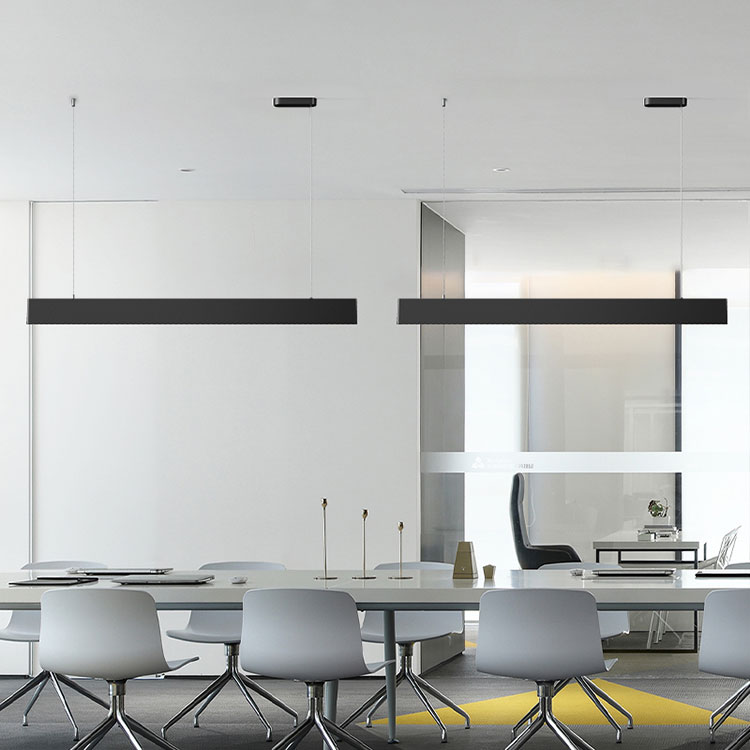
Understanding Color Temperature: The Kelvin Scale
Color temperature is measured in Kelvin (K). Lower numbers = warmer (yellow/orange), higher numbers = cooler (blue/white). For a 30W One-Word LED Pendant Light, the typical range is 2700K–5000K. Here is what each band does to your living room:
| Kelvin Range | Appearance | Best For | Effect on Mood |
|---|---|---|---|
| 2700K–3000K | Warm White | Relaxing evenings, reading corners | Cozy, inviting, reduces cortisol |
| 3500K–4100K | Neutral White | Multi-purpose spaces, home offices | Alert but not harsh, balanced |
| 5000K–6500K | Daylight/Cool White | Task lighting, garages (not recommended for living rooms) | High focus, can feel clinical |
The Winner: 2700K–3000K for Most Living Rooms
After testing multiple configurations, Dadi recommends 2700K–3000K as the optimal range for a 30W One-Word LED Pendant Light in a living room. Why? Because this temperature mimics the golden hour of sunlight—warm, flattering to skin tones, and compatible with wooden floors, beige sofas, and earthy décor. It also reduces blue-light exposure in the evening, supporting natural circadian rhythms.
For homes with cooler wall colors (grey, blue, or white), 3000K offers a slightly crisper contrast without losing warmth. Dadi’s 30W One-Word LED Pendant Light models feature a built-in CRI >90, ensuring that warm white renders reds and browns vividly—crucial for artwork and textiles.
When to Choose 4000K Instead
Neutral white (4000K) works if your living room doubles as a workspace or if you have abundant natural daylight from large windows. A 30W One-Word LED Pendant Light at 4000K pairs well with metallic finishes and glass surfaces. However, Dadi warns that 4000K can feel “office-like” after sunset—so only choose this if you install a dimmer to shift warmth later in the day.
Pro Tip: Dimmability Changes Everything
The best solution is not a fixed temperature but tunable white technology. Dadi offers a tunable version of the 30W One-Word LED Pendant Light that lets you slide from 2700K to 4000K via a wall controller. This gives you the flexibility to host bright game nights (4000K) and switch to intimate movie modes (2700K) with one touch.
Placement Matters More Than You Think
Even with the perfect Kelvin, height and position alter perception. Hang your 30W One-Word LED Pendant Light 70–90 cm above the coffee table for direct warmth. If placed in a corner, bump up to 3000K to compensate for lower ambient reflection. Dadi provides a free online light-planner tool to map lux levels across your floor plan.
FAQ – Common Questions About the 30W One-Word LED Pendant Light
Q1: Can I use a 5000K 30W One-Word LED Pendant Light in my living room if I prefer a modern look?
A: Technically yes, but Dadi advises against it for primary living spaces. 5000K emits high blue-light content, which can suppress melatonin and cause eye strain over long evenings. If you insist on daylight, pair it with warm floor lamps to balance the spectrum. For a modern look without the clinical feel, 3000K with a matte black or brushed nickel finish from Dadi achieves the same contemporary vibe while keeping comfort.
Q2: Does the 30W One-Word LED Pendant Light come with interchangeable temperature chips?
A: Most fixed-temperature models do not allow chip swapping. However, Dadi’s Smart Series offers a revolutionary plug-in module that lets you replace the LED board in under 2 minutes—offering 2700K, 3000K, and 4000K options sold separately. This is far more cost-effective than buying three separate pendants. Always check the product code: models ending in “-T” are tunable; “-F” are fixed.
Q3: How do I know if 2700K or 3000K looks better with my dark walnut furniture?
A: Dark woods absorb light, so 2700K can sometimes appear too amber, making the room feel dim. Dadi’s lab tests show that 3000K raises the perceived brightness by 18% on walnut surfaces without washing out the grain. We recommend ordering a free Dadi sample kit—it includes a 2700K and 3000K mini-panel to hold against your actual furniture before purchase.
Quick Decision Matrix for Your 30W One-Word LED Pendant Light
| Your Living Room Style | Recommended Kelvin | Dadi Model Suggestion |
|---|---|---|
| Bohemian / Earthy tones | 2700K | Dadi Classic Warm |
| Scandinavian / Light wood | 3000K | Dadi Nordic Plus |
| Industrial / Concrete & Metal | 3000K–3500K | Dadi Urban Tunable |
| Multi-function (work + relax) | Tunable 2700K–4000K | Dadi Smart Flex |
Final Verdict
For 9 out of 10 living rooms, 3000K delivers the perfect balance—warm enough for coziness, yet bright enough for clear visibility under a 30W One-Word LED Pendant Light. Pair it with a dimmer switch and high-CRI optics from Dadi, and you will never second-guess your choice. Remember: the best temperature is the one that changes with your day, not the one that locks you into a single mood.
Ready to find your perfect glow? Contact the Dadi lighting consultants today for a personalized 3D simulation of your living room with our 30W One-Word LED Pendant Light—including free shipping on sample kits and a 5-year warranty on all tunable drivers. Reach us at our official website or drop an email to [email protected]. Let us help you light your home the right way.